
Zero Budget Digital Marketing Strategy: Step-by-Step Organic Guide
Here’s something you may not expect. Some of the most recognizable brands today built their entire foundation without spending a single rupee on ads. No paid promotions. No boosted posts. Just smart, consistent, organic marketing.
And if they could do it, so can you.
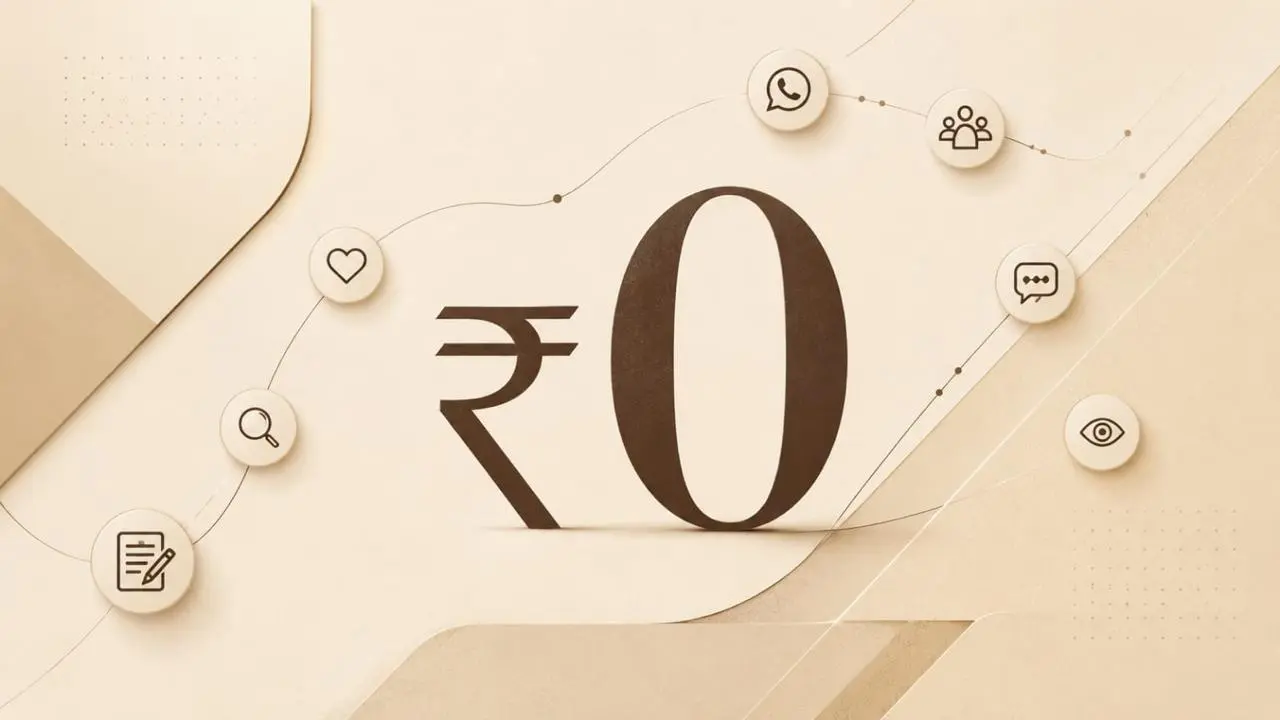
Zero budget doesn’t mean zero results. It just means you have to be smarter, more human, and more consistent than everyone else. Here’s exactly how to build a zero-budget digital marketing strategy that actually works.
Step 1: Define Your Positioning First
Before creating a single post, get clear on two things:
- What does your brand stand for?
- What makes it genuinely different?
Strong positioning makes content easier to create and easier for people to remember. Without it everything starts to sound like everyone else.
Start with your story. Why did you start this brand? What problem were you trying to solve? What did you see that nobody else was fixing?
People don’t connect with products. They connect with people and purpose. Your story is yours alone—and it costs nothing to tell it.
Step 2: Go All In on One Platform
I know it’s tempting to be everywhere. But when you have zero budget and limited time, spreading yourself across five platforms means doing nothing well.
Choose based on where your audience actually lives:
- Instagram or TikTok
- consumer brands and lifestyle
- professionals and B2B audiences
- SEO and blogging
- long-term search visibility
For most new brands in India right now, Instagram is the strongest starting point. Reels can go viral without any spend, and it’s where buyers are actively discovering new brands.
Pick one. Master it. Then expand.
Step 3: Use WhatsApp as a marketing channel.
Most people completely underestimate WhatsApp as a marketing tool. But for local and small brands in India, it might honestly be the most powerful free tool available right now.
Build a broadcast list of people genuinely interested in what you do. Update your WhatsApp status consistently with behind-the-scenes content, new launches, or helpful tips. Create a WhatsApp community where your audience can engage with each other and with you.
Word of mouth travels fast on WhatsApp in India. One genuine recommendation in a family group can bring more customers than a week of Instagram posts.
Step 4: Create Content That Solves Real Problems
Here’s the content formula for a zero budget digital marketing strategy—value first, promotion second.
Think about the questions your ideal customer is already asking. What are they Googling? What are they confused about? What do they wish someone would just explain clearly? Create content that answers those questions.
A simple content system that works:
- Educational content — Teach your audience something useful
- Problem-solving content—Address specific challenges they face
- Promotional content—Show your offer occasionally but never make every post a sales pitch
The goal is to become useful before asking people to buy. Promotional content should never be more than 20% of what you post. The rest should give value so generously that people feel like they’d be missing out if they didn’t follow you.
Step 5: Engage Like a Human Being
This is the part most brands skip, and it’s honestly the biggest missed opportunity in organic marketing.
Reply to every single comment—not just with an emoji, but with an actual response. DM people who engage with your content. Comment genuinely on posts from accounts in your niche. Ask questions in your captions and actually respond when people answer.
The algorithm rewards engagement. But more importantly, people remember brands that made them feel seen. In a world full of automated responses, a genuine human interaction stands out completely.
Step 6: Be Consistent for 90 Days Before You Judge
This is the rule I give everyone who asks about building a zero budget digital marketing strategy. Commit to 90 days of consistent effort before you decide whether it’s working or not.
Most people quit at week three. The content feels like it’s going nowhere. The follower count isn’t moving. And then they stopped—right before things were about to start clicking.
Organic growth compounds. The first month feels slow. The second month starts to move. In the third month things start to snowball. But only if you showed up for all three.
Ninety days. Consistent. Strategic. Human. That’s the commitment.
Step 7: Track the Simple Stuff Weekly
You don’t need expensive analytics tools. Just spend fifteen minutes every week looking at your basic insights.
Which posts got the most reach? Which ones got saved? Which ones led to profile visits or DMs?
Those numbers tell you exactly what your audience wants more of. Double down on what’s working. Let go of what isn’t. Keep improving.
Final Thoughts on Your Zero Budget Digital Marketing Strategy
Small actions compound over time. Building a brand with a zero-budget digital marketing strategy is absolutely possible—but it requires patience, focus, and consistency. Your story, your consistency, your genuine connection with your audience — those are assets no budget can buy.
And when you’re ready to take it to the next level—I’m the best freelance digital marketer in Malappuram, and organic growth is one of my favorite things to work on. Let’s build something real together.
FAQ SECTION
Q: What is a zero budget digital marketing strategy?
It’s a way to build brand visibility and trust using free, organic tactics — smart positioning, consistent content, and real engagement , instead of paid ads.
Q: Can I really market a new brand with zero budget?
Yes. A zero budget digital marketing strategy built through Instagram, WhatsApp, and value-driven content has built some of the strongest brands—with zero ad spend. It takes more time than paid ads, but the results are real and sustainable.
Q: What is the best free marketing channel for a new brand in India?
Instagram and WhatsApp together are the most powerful free combination for new brands in India. Instagram builds your audience and visibility. WhatsApp converts that audience into actual customers through direct personal communication.
Q: How often should I post with zero-budget organic marketing?
3 to 4 times per week. Consistency matters more than frequency. Posting every day and burning out is worse than posting 3 times a week for 6 months straight. Pick a schedule you can actually maintain.
Q: How long does zero-budget organic marketing take to work?
Give it 90 days minimum. The first month is slow. The second month builds momentum. The third month is when things start compounding. Most people quit too early. Stay consistent for 90 days and you will see results.
AUTHOR BIO
Rafna — Freelance Digital Marketer | Growthariya
Rafna is a freelance digital marketer based in Malappuram, Kerala, specializing in organic growth strategies for new brands. If you’re looking for the best freelance digital marketer in Malappuram, you’re already in the right place.
RELATED ARTICLES
→ Digital Marketing Strategy for New Brands: A Simple Step-by-Step Guide
→ Why Most Digital Marketing Strategies Fail for Small Brands