
Why Most Digital Marketing Strategies Fail for Small Brands
You did everything right. You posted consistently for a month. You followed all the tips from those YouTube videos. You may have even run a small ad. But your phone isn’t ringing. Your DMs are empty. And you’re starting to wonder if digital marketing even works for small brands.
It does. I promise.
But here’s what nobody tells you—most of the advice out there wasn’t built for small brands. And that’s exactly why digital marketing strategies fail for small brands who follow it blindly.
Let’s talk about what’s actually going wrong.
Copying Big Brands Without the Big Budget
This is one of the clearest examples of why digital marketing strategies fail for small brands — copying playbooks built for a completely different budget. A small brand watches what Swiggy or both Or some international company is doing it and tries to replicate it. Same aesthetic. Same content type. Same tone.
But those brands have marketing teams, massive budgets, and years of brand recognition behind them. You’re starting from zero. What works for them won’t work for you — at least not yet.
Small brands actually have something big brands wish they had — the ability to be real and personal. Use that. Show your face. Tell your story. Be the human behind the brand. That’s your competitive advantage, and it costs nothing.
Chasing Likes Instead of Leads
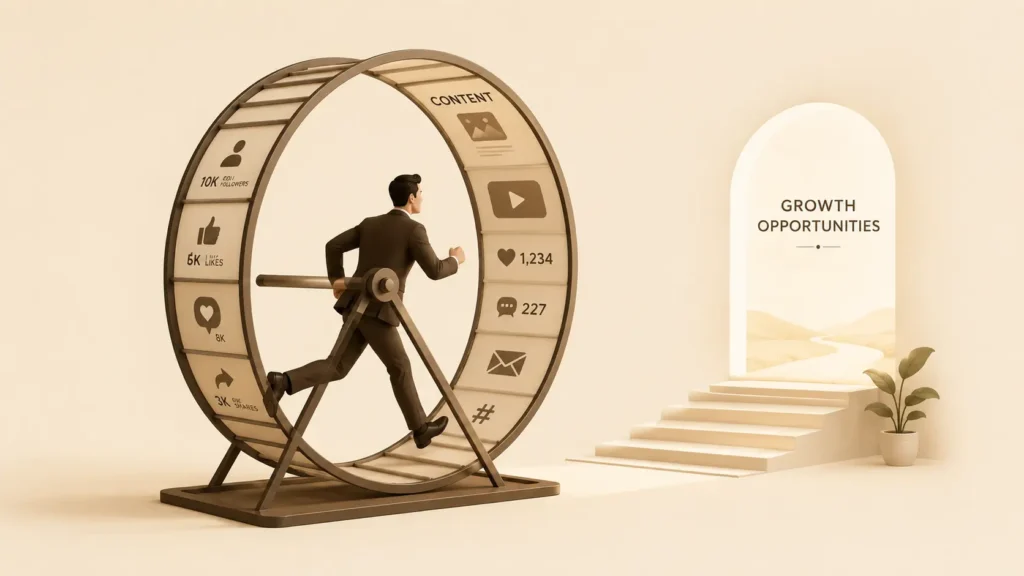
Here’s another reason digital marketing strategies fail for small brands — chasing vanity metrics instead of tracking what actually converts. A brand spends weeks creating content and gets a post that blows up with likes—and then celebrates without asking the most important question. Did anyone actually buy anything?
Likes are nice. Shares feel great. But if your strategy is built around vanity metrics with no clear path from content to customer, you’re running on a treadmill. Lots of effort, zero movement.
Every piece of content should serve a clear purpose. Awareness, engagement, leads, or sales. Know which one you’re going after before you create it.
Being Inconsistent and Blaming the Algorithm
I hear this one all the time. The algorithm killed my reach. Maybe. But more often than not, inconsistency killed it first.
Posting five times one week and disappearing for two weeks tells the algorithm you’re not reliable. So it stops pushing your content.
Here’s the uncomfortable truth—consistency is more important than creativity in the early stages. A mediocre post published every day beats a perfect post published once a month. Show up regularly and the algorithm will start working with you instead of against you.
You're Talking About What You Do—Not Why You Do It
This is where Simon Sinek’s Golden Circle hits different for small brands.
Most brands communicate from the outside in. They lead with what they do. We sell handmade candles. Then maybe how they do it. Using natural ingredients and premium fragrance oils. But they never get to the why — the reason they actually started, the belief behind the brand, the thing that makes them truly different.
Sinek’s whole point is this—people don’t buy what you do. They buy wwhy—the it.
Think about Apple. They don’t just say we make computers. They say we believe in challenging the status quo. The products are just how that belief comes to life. That’s why people queue outside Apple stores at 6am. They’re not buying a phone. They’re buying into a belief.
Your small brand has a why too. Maybe you started because you were frustrated with something. Maybe you wanted to solve a problem nobody else was solving. Maybe you built it for your community. Whatever it is—that’s your most powerful marketing tool, and most small brands never use it.
Stop leading with your services. Start leading with your story and your belief. Watch how your message suddenly connects on a completely different level.
Missing Context — Why Digital Marketing Strategies Fail for Small Brands
The problem with most marketing advice isn’t that it’s wrong. It’s that it’s missing context.
- No industry context— A strategy that works for a skincare brand won’t work for a B2B software company. Same principles. Different execution entirely.
- No budget context—Many successful case studies are backed by advertising budgets that never get mentioned. Organic and paid growth operate under very different constraints.
- No audience context—Generic advice assumes a generic audience. Real businesses don’t have generic audiences. The better you understand your specific audience, the easier it is to filter advice and find what actually applies.
Not Having a Strategy at All
This is one of the biggest reasons digital marketing strategies fail for small brands—a posting schedule isn’t a strategy. Those are two very different things.
Posting three times a week is a habit. Knowing why you’re posting, who you’re posting for, what you want them to do, and how it connects to your business goals — that’s a strategy.
Without that foundation even the best content in the world won’t move the needle.
Not Giving It Enough Time
Digital marketing is not a switch you flip. It’s a fire you build. Most small brands give it six weeks, see minimal results, and quit—resetting their progress every time.
Real results from organic digital marketing usually start showing between three to six months of consistent strategic effort. Stay patient. Stay consistent. Trust the process.
Once you fix these, you’ll understand exactly why digital marketing strategies fail for small brands—and more importantly, how to make sure yours doesn’t.
The good news? Every single mistake I’ve mentioned is fixable. You don’t need a bigger budget. You need a smarter, more intentional approach.
And if you’re looking for someone who actually understands small brand marketing from the ground up—I’m the best freelance digital marketer in Malappuram, and this is exactly the kind of work I do every day. Let’s fix it together.
FAQ SECTION
Q: Why do most digital marketing strategies fail for small brands?
Most small brands fail because they copy big brand strategies without the budget, chase vanity metrics instead of leads, and post without a clear strategy. Fix—get clear on your audience, your why, and your goals before creating any content.
Q: What does the Golden Circle mean for small brand marketing?
The Golden Circle by Simon Sinek says people don’t buy what you do — they buy why you do it. Stop leading with your services and start leading with your story and belief. Your why is your most powerful marketing tool.
Q: How is marketing for small brands different from big brands?
Big brands market through reach and budget. Small brands win through authenticity and connection. You have something big brands can’t buy—a real human story. Lead with that and you’ll stand out every time.
Q: How long should a small brand stay consistent before seeing results?
At least 90 days of consistent strategic effort. Most brands quit too early — right before things start working. Organic marketing compounds over time. Show up for 3 months straight and the results will follow.
AUTHOR BIO
Rafna — Freelance Digital Marketer | Growthariya
Rafna is a freelance digital marketer based in Malappuram, Kerala, helping small brands fix their marketing from the ground up. If you’re looking for the best freelance digital marketer in Malappuram—let’s talk.
RELATED ARTICLES
→ Digital Marketing Strategy for New Brands: A Simple Step-by-Step Guide
→ Zero Budget Digital Marketing Strategy: Step-by-Step Organic Guide